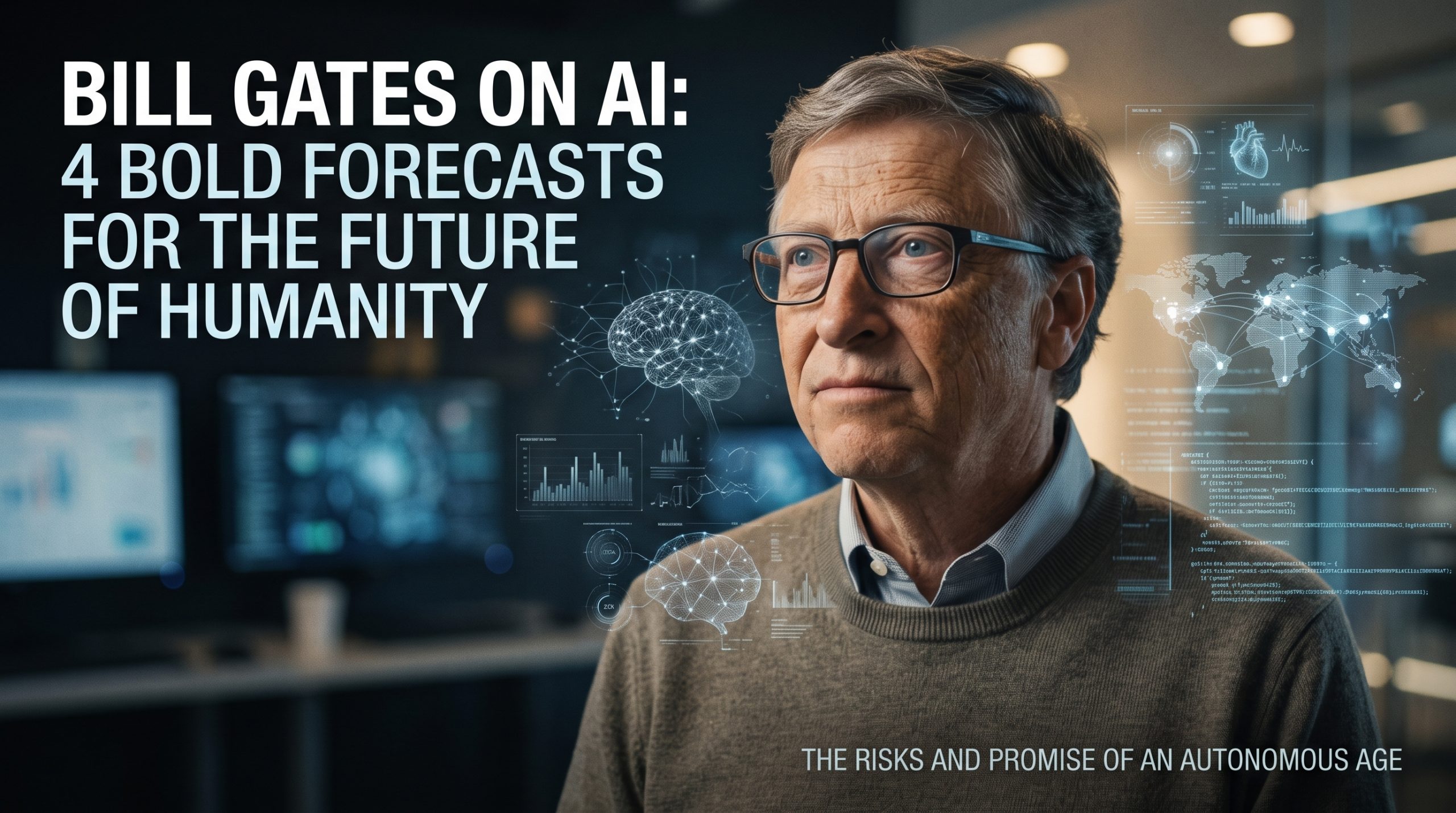
Bill Gates views the artificial intelligence revolution not as a routine phase of technological automation, but as a paradigm-shifting era that will rapidly reshape the global economy. As of late 2026, the Microsoft co-founder has articulated a complex vision where AI acts as the greatest equalizer in human history, provided society can survive the unprecedented economic and security threats it introduces.
- Autonomous Agents Will Democratize Essential Services Gates predicts that the rapid emergence of autonomous AI agents around 2026 will completely upend the software industry. By operating through natural language across existing devices, these agents will make highly specialized services accessible to the masses. He anticipates a future where high-quality medical triage, personalized education, and advanced productivity tools are no longer restricted by prohibitive costs, potentially leveling the playing field across global socioeconomic divides.
- Unprecedented Job Displacement Requires an “AI Tax” Unlike previous industrial revolutions that unfolded over generations, Gates warns that AI-driven job displacement could decimate entry-level and mid-level positions within a single decade. To combat this severe economic shock, he advocates for a radical shift in public policy: taxing AI tokens and robotic labor. Because current tax structures naturally incentivize employers to replace human workers with machines, Gates argues an AI tax is essential to fund robust social safety nets and extensive worker retraining programs. Additionally, he proposes creating a “Human Reserved” category of employment, specifically safeguarding roles that require genuine human empathy, such as caregiving.
- Malicious Actors Pose an Immediate, Existential Threat While popular culture often fears autonomous AI spontaneously going rogue, Gates emphasizes that the actual near-term danger lies in “bad people using AI” without safety guardrails. He warns of imminent “negative surprises” in the cybersecurity arena, where the technology drastically lowers the barrier to entry for executing large-scale fraud and crippling attacks on essential infrastructure. Most alarmingly, Gates highlights the risk of AI-facilitated bioterrorism, stating that this synthesized threat is “about 50 times more scary” and statistically more probable than another naturally occurring global pandemic.
- AI Dependency Will Threaten Child Development Beyond macroeconomic and security threats, Gates expresses deep concern over AI’s psychological impact on younger generations. He fears that continuous interaction with unfailingly polite, hyper-accommodating AI assistants could foster severe technological dependencies. This reliance risks depriving children of the necessary interpersonal friction required to build empathy, emotional resilience, and authentic social skills. Furthermore, offloading routine cognitive tasks to AI could severely stunt academic development and weaken critical thinking abilities.
Despite outlining these monumental challenges, Gates remains highly critical of the current global response. He notes a glaring lack of readiness to ease humanity’s transition into this new era, warning that global leaders are failing to act with the necessary urgency. For Gates, mitigating the worst outcomes requires immediate, unified action to establish strict regulations and shared norms before AI amplifies existing societal injustices.
Leave a Reply